

Table of Contents
History of World Asthma Day (WAD)
World Asthma Day is promoted by the Global Initiative for Asthma (GINA), a World Health Organization collaborative group established in 1993. Over 35 nations marked World Asthma Day in 1998, alongside the inaugural World Asthma Meeting in Barcelona, Spain. Since then, participation in World Asthma Day has increased, and the day has become one of the globe’s most significant asthma awareness and educational awareness campaigns.
Each year, on 6th May celebrates World Asthma Day brings focus to the millions of people suffering from asthma—a long-term chronic condition that affects over 260 million individuals across the globe and is responsible for over 450,000 preventable deaths every year.
Theme of World Asthma Day 2025
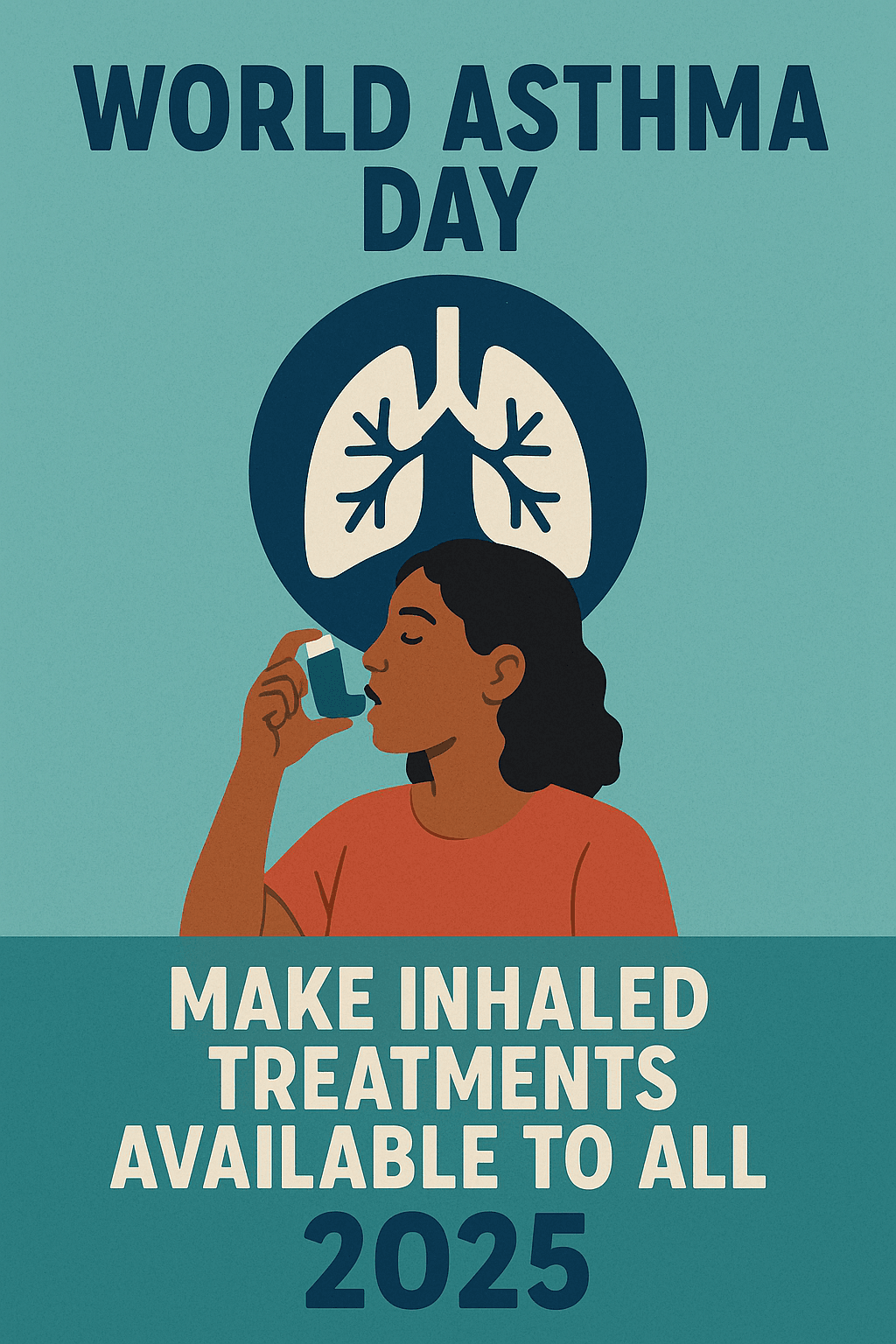
the Global Initiative for Asthma (GINA) has selected an important theme:
“Make Inhaled Treatments Available to ALL”
World Asthma Day (WAD) is an annual initiative started by the Global Initiative for Asthma (GINA) to create awareness of asthma, a long-term respiratory disease affecting millions globally. It is observed on the first Tuesday of May every year, this day seeks to make individuals aware of asthma prevention, control, and treatment.
This rallying cry emphasizes a dire problem-tens of millions of asthma patients still do not have access to life-saving inhaled medications, risking severe attacks, hospitalizations, and even death.
When is World Asthma Day Observed?
World Asthma Day is celebrated annually on the first Tuesday in May. It will be May 7 in 2024 and May 6 in 2025. The date is a few days different every year, but always falls within the first week in May.
May was selected to be compatible with the spring season in most nations, where asthma symptoms are likely to increase because of pollen, allergy, and climatic changes. By monitoring WAD in May, health bodies can bring focus to the sufferings of patients with asthma and encourage improved care practices.
Why is World Asthma Day Celebrated on May 6 (or the First Tuesday of May)?
World Asthma Day was first started in 1998 by the Global Initiative for Asthma (GINA) to enhance asthma awareness and treatment worldwide. The choice of the first Tuesday of May was:
- Seasonal Asthma Triggers – May is dry, hot and humid, and allergy season in most parts of the world, with high pollen levels to infuriate asthma. Awareness during this period encourages individuals to take preventive action and medication.
- Global Participation – A Tuesday on a weekday makes it easy for healthcare providers, schools, and workplaces to plan events, seminars, and campaigns to reach global awareness.
- Historical Significance – The first observation of WAD was in 1998, and the practice of celebrating it on the first Tuesday of May has been maintained since then.
In certain years, such as in 2025, May 6 becomes the first Tuesday, and by rule, therefore the official day that year.
Theme of World Asthma Day 2024
In celebration of World Asthma Day 2024, the Global Initiative for Asthma (GINA) has selected the theme of “Asthma Education Empowers”.
GINA calls on individuals with asthma to be provided with the correct education to manage their condition and to understand when to go for medical care. Health professionals are requested to raise their awareness of the persistent avoidable morbidity and mortality due to asthma, and of the published literature on successful asthma management, in order to offer sound information and the best treatment for their patients.
Why is World Asthma Day Important?
Asthma is a major global health problem that affects more than 300 million individuals worldwide, with 250,000 annual deaths resulting from inadequate control of the disease. Most important reasons why WAD is vital are:
- Raising Awareness – There are a number of individuals who undermine how severe asthma is. WAD creates public awareness about its risks and symptoms and their prevention.
- Encouraging Early Diagnosis – Undiagnosed asthma may result in serious complications. Early prevention and care is encouraged through awareness campaigns.
- Reducing Stigma – Asthma patients are frequently subjected to misconceptions and myths that asthma has no preventive measures. WAD can aware people about the proper medication and preventive care.
- Encouraging Research – This day emphasizes the necessity for improved treatments and funding for asthma research.
- Bettering Healthcare Policies – Advocacy pushes governments to enforce improved asthma care programs.
Why Are Inhaled Medications So Important?
Asthma is not only about sporadic breathing problems—it’s a long-term inflammatory illness. Inhaled corticosteroids (ICS) are the foundation of asthma treatment since they suppress airway inflammation, forestalling attacks before they occur. However, most patients use only reliever inhalers (such as albuterol), which alleviate symptoms but do not treat the underlying cause. GINA encourages physicians and healthcare professionals to make sure all asthma patients get:
- Preventive ICS-based therapy (alone or combined with relievers)
- Adequate education regarding the proper use of inhalers
- Regular follow-ups to fine-tune treatment as required
Without these, asthma continues to be uncontrolled, causing unnecessary morbidity and mortality.
Importance of World Asthma Day (WAD)
Asthma is not only a health problem, but it’s a global inequality crisis too, and is the most prevalent chronic illness in children and adults globally.
The World Health Organization (WHO) attests to what most already witness on the ground—asthma is both an effect and a cause of poverty, particularly in low- and middle-income countries. 262 million individuals across the globe live with asthma. In 2019 alone, asthma claimed 455,000 lives—most were preventable deaths.
India’s Asthma Crisis: Highest Deaths, Lowest Care.
India bears a disproportionate asthma burden, as the Global Burden of Disease Report (2019) points out that more than 34 million Indians suffer from asthma—that’s 13% of the world’s asthmatic patients. But India is responsible for a confounded 42% of asthma-related deaths worldwide.
Why? Inadequate access to essential treatments, poor air quality, and healthcare shortcomings make millions of people fight for breath.
The Solution? Care that Is Affordable to All
No one ought to die due to the unaffordability of an inhaler. Governments, pharmaceutical industries, and global health authorities have to move fast to make asthma medication affordable and accessible, clean up the air in dirty cities, and teach communities about managing asthma. Asthma doesn’t need to be fatal. With proper policies, we can save millions of lives.
How to Celebrate World Asthma Day?
World Asthma Day can be celebrated in many ways, ranging from individual actions to a community awareness campaign. Some ways to participate in WAD are:
- Educational Workshops and Seminars in schools, hospitals, and free asthma camps in villages to create awareness, and host seminars on asthma management.
- Social Media Campaigns with hashtags such as #WorldAsthmaDay, #AsthmaAwareness, and #BreatheEasy. Social media posts and influencers can participate in such a campaign by providing proper knowledge.
- Initiatives in the School and Workplace may educate students on asthma symptoms and first aid.
- Businesses can organize a workplace asthma campaign for their employees.
- Fundraising for Research on Asthma or online campaigns to donate to asthma foundations. Contribute to institutions such as GINA, the Asthma and Allergy Foundation of America (AAFA), or national NGOs.
- Government and Policy Advocacy for improved air quality regulations that can help alleviate pollution-induced asthma triggers.
- Personal Actions to educate and instruct good inhaler practice, avoid smoking, and limit exposure to allergens.
Policy-makers and health planners must be aware of the disease burden, the economic costs of uncontrolled asthma attacks and symptoms, and the cost-saving treatments. In most LMICs, health facilities do not have the basic elements of asthma care, including inhalers, which can change the lives of individuals with asthma.
The Global Alliance for Chronic Respiratory Diseases (GARD) is a WHO-led network dedicated to addressing the global burden of chronic respiratory diseases. Members of GARD organizations are collaborating to share good practices and resources for asthma education and in the creation of simple messages to assist healthcare professionals and individuals with asthma.

