Introduction: Why Your Voter ID Might Not Be Enough
You’ve voted in the same booth for a decade. You have your Electors Photo Identity Card (EPIC) tucked away in a safe place. But on election day, you could discover your name has vanished from the list. This isn’t a rare glitch; it’s a real possibility for millions, and it stems from a crucial misunderstanding of how our democracy maintains its most fundamental record: the voter list.
The Election Commission of India (ECI) periodically undertakes a massive verification drive known as the Special Intensive Revision (SIR). Its purpose is to create an “error-free voter list” by meticulously updating, correcting, and cleaning the national voter database.
This post will uncover five surprising and essential truths about this process. Understanding them is critical for every citizen who wants to protect their vote and ensure their voice is heard.
1. It’s Not Just for New Voters—Even Regulars Must Verify Their Details
A common and dangerous mistake is believing the Special Intensive Revision is only for registering first-time voters. The truth is, even if you have been a regular voter for years, you must participate in this exercise.
The core fact many citizens miss is this: possessing a Voter ID card does not guarantee your name is on the current, updated electoral roll. Over time, due to factors like internal migration, resettlement, and periodic data updates, names can be inadvertently missed or marked for deletion. Participating in the SIR ensures your details are verified and your eligibility for upcoming elections is confirmed.
If your name is missing from the draft roll published after the drive, you must contact your local Electoral Registration Officer (ERO)—the official responsible for maintaining the voter list in your constituency—to file a claim for inclusion. Alongside the draft roll, a specific list of “absent, shifted, deceased, and duplicate names” will be published on your state’s Chief Electoral Officer (CEO) website, giving you a clear place to check your status.
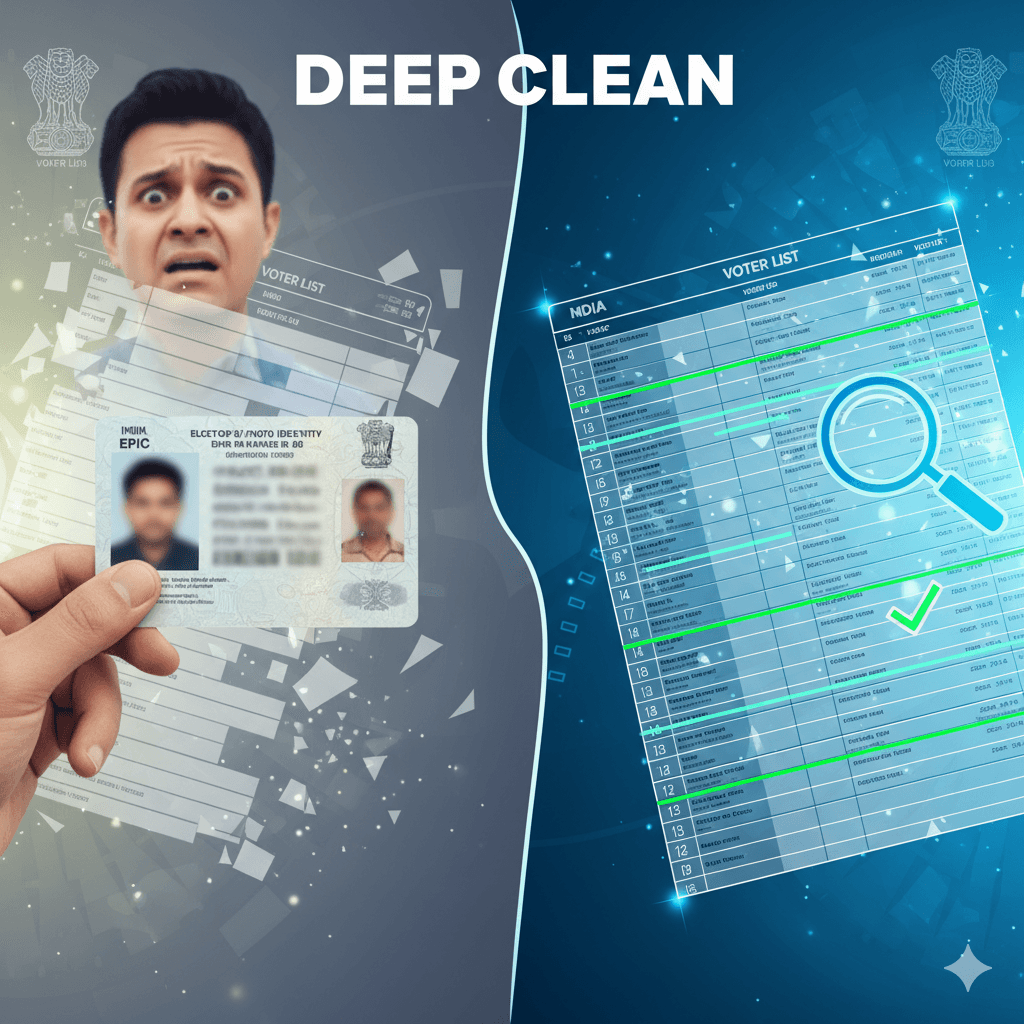
2. The Goal is a ‘Deep Clean,’ Not Just an Update
The SIR is more than a simple update; its primary objective is to “‘clean’ electoral data.” This comprehensive process goes far beyond just adding new names to the list.
This “deep clean” is a systematic purge to ensure the integrity of the voter list. Election officials actively remove the names of deceased persons, delete duplicate entries that may exist for a single voter, and identify and remove voters who have permanently shifted their residences.
This meticulous cleaning process is vital for the health of our democracy. It prevents electoral malpractices, avoids the distortion of vote percentages, and reinforces the core democratic value of “one person, one vote.”
3. The Last Comprehensive Overhaul Was Nearly Two Decades Ago
One of the most surprising facts about the current wave of Special Intensive Revisions is the sheer amount of time that has passed since the last one of this scale. The last comprehensive revision was conducted almost twenty years ago.
A new, thorough revision is necessary now more than ever. Several significant demographic and social shifts have occurred in the intervening decades that have rendered older lists outdated, including the lowering of the voting age and massive internal migration driven by employment and urban expansion.
As the Election Commission has emphasized, this long gap makes the current drive particularly critical:
“The last comprehensive revision was conducted nearly two decades ago. Since then, the voting age has been reduced from 21 to 18 years, and alongside rapid urban expansion, there has been massive internal migration.”
4. The Process Blends Old-School Legwork with Modern Tech
This isn’t just about paperwork; it’s a fascinating hybrid operation where shoe-leather canvassing meets real-time data verification on a smartphone.
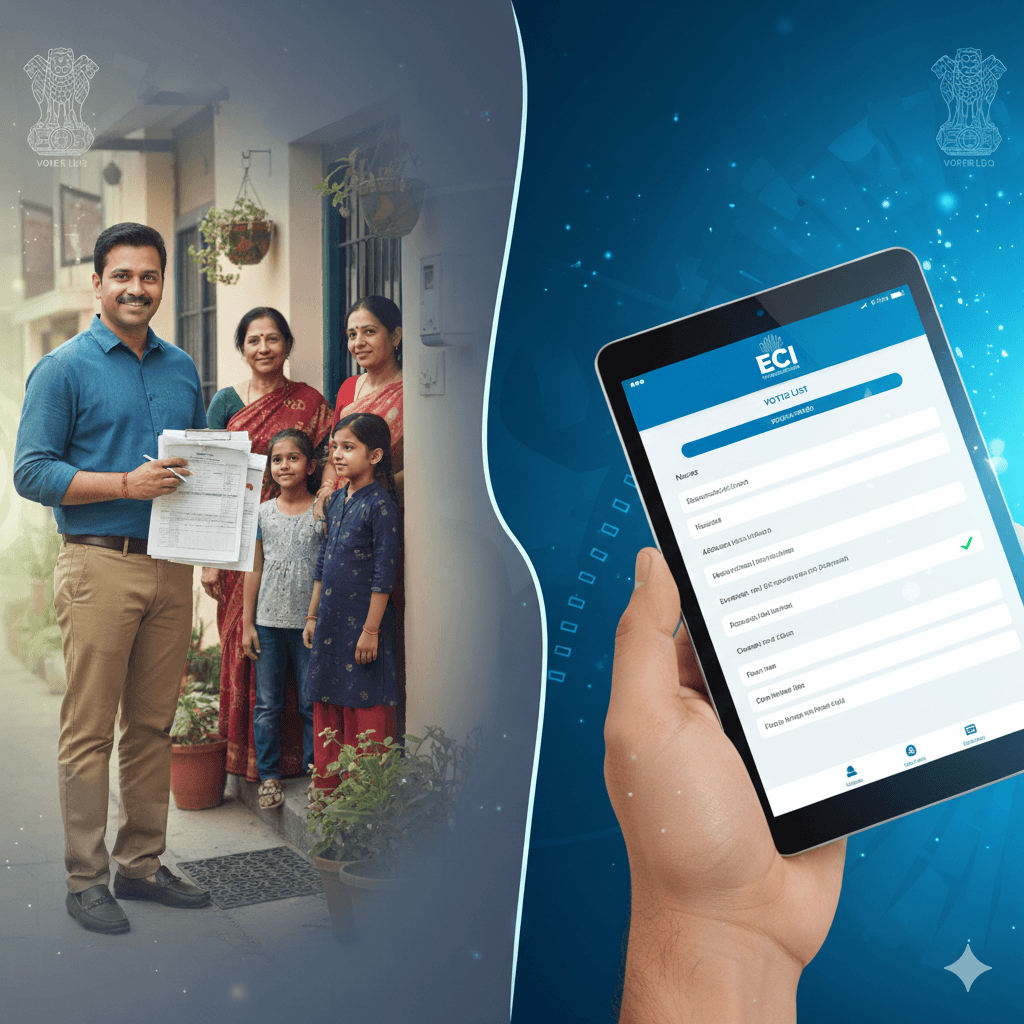
The “low-tech” foundation is the work of the Booth Level Officer (BLO). These officials are tasked with physically visiting each household—making at least three visits—to distribute and later collect the physical Enumeration Form (EF), the official document used to verify or update every voter’s details. This ground-level effort is supported by Booth Level Agents (BLAs), who are appointed by political parties and can also help collect forms, adding another layer to the civic process.
Simultaneously, the ECI has implemented a “high-tech” online path through the Voter’s Service Portal. This digital track includes:
- Using your EPIC number to access a pre-filled form.
- Verifying your identity with an OTP sent to your linked mobile number.
- Using Aadhaar-linked eSign for a final, paperless submission.
Even the BLOs are tech-enabled. They use a mobile app that scans forms in a two-step process. During distribution, the app blinks blue to log that a form has been delivered. When the filled form is collected and scanned, the app blinks green, confirming in real-time that the voter’s data has been successfully updated in the master electoral database.
5. A Family Member Can Fill the Form For You (Under Certain Conditions)
If you are temporarily away from your constituency for reasons like studies or work, you don’t have to miss out on the SIR process. The ECI has included a practical provision to address this common situation.
An adult family member, who is also registered as a voter in the same constituency, can fill out and sign the Enumeration Form on your behalf. This is a crucial feature that makes the process more accessible for students, migrant workers, and others who cannot be physically present during the enumeration period.
However, there is a necessary caveat: the family member completing the form must clearly state their relationship to you (e.g., father, spouse, mother) and sign on your behalf. This simple but important rule provides a practical solution that helps ensure no eligible voter is left behind.
Conclusion: Your Vote is a Responsibility, Not Just a Right
The Special Intensive Revision is not just another bureaucratic task; it is a foundational exercise in democratic accountability. The integrity of an election rests on the accuracy of the voter list, and that accuracy depends on the active participation of citizens like you. An outdated roll is a vulnerability, one that can disenfranchise the eligible and enable malpractices.
To ensure your right to vote is protected, be proactive. Check your state’s Chief Electoral Officer (CEO) website or the main ECI portal for information about SIR drives in your area. Your participation is a small but powerful act of civic duty that shores up the very foundation of our electoral system.
Now that you know what it takes to maintain an accurate voter list, what role will you play in strengthening our democracy?